Free facilitator guide
Good Human Norms
A 30 minute activity for one of the first days of class
In one 30 minute lesson, your class decides what it means to be a good human in your room, writes its own norms, and signs them. It is a Tier 1 SEL lesson for every class, in the first week of school or at the start of a new semester or quarter.
Why it works: Restorative practices teaches that people are more open to change when we do things with them, not to them or for them (IIRP). When students write the norms, they own them. When you refer back to the poster, it is theirs.
Before class
- Sticky notes, 3 per student
- Chart paper or a poster for each class period, and markers
- One answer of your own to model
- A timer
Know the five skills to listen for. The norms come from students, not from you. Don’t hand students a list. Keep the five human skills in mind as they share, and name the skill behind each norm they write. Make sure every human skill has at least one norm.
| Students might write | The human skill |
|---|---|
| We stay calm when we are upset. | Self-awareness |
| We keep trying, even when it is hard. | Self-management |
| We listen to each other. | Social awareness |
| We help and include everyone. | Relationship skills |
| We own our mistakes. | Responsible decision-making |
A skill is missing? Ask, don’t tell. Draw it out with a question: “What should we do when someone makes a mistake?” or “What helps when we feel frustrated?”
The 30 minute lesson
| Time | Move | You say and do | Students do |
|---|---|---|---|
| 3 min | 1. Name it | “Today we decide what it means to be a good human in this room. Our skill is responsible decision-making, because we are deciding together.” | Hear the goal and the skill. |
| 4 min | 2. Show it | Model one answer and think aloud: “A good human listens when someone else is talking.” | Watch how to answer. |
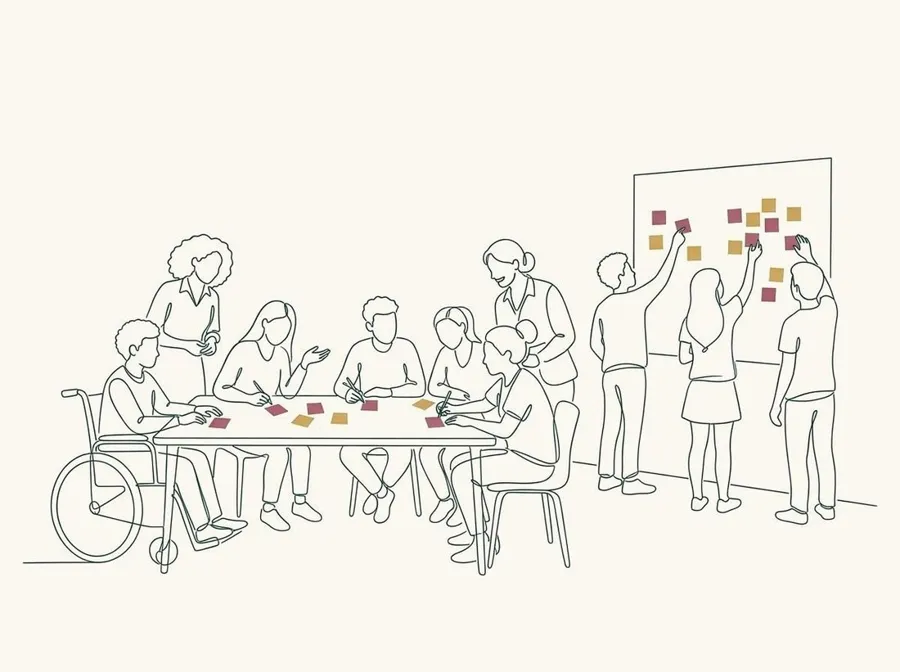
| 16 min | 3. Practice it | Give each student three sticky notes. “Answer these, one idea per note: How do good humans treat each other? What does a good human do when it gets hard? What does a good human do after a mistake?” Students post their notes on the chart paper. Together, group the notes that match and turn each group into a norm that starts with “We.” Name the skill behind each one. | Write three notes, post them, and help group them into 5 to 7 “We” norms. |
| 7 min | 4. Reflect on it | Students choose a title, and everyone signs, you too. Exit prompt: “Which norm will help our class most?” or “I prefer not to share.” | Sign the poster. Answer or pass. |
- Wait five seconds after each question.
- Turn every “don’t” into a “do”: “Don’t interrupt” becomes “We listen and respect each other.”
- Short on time? Write and post the notes one day, then group, title, and sign the next.
Making the poster
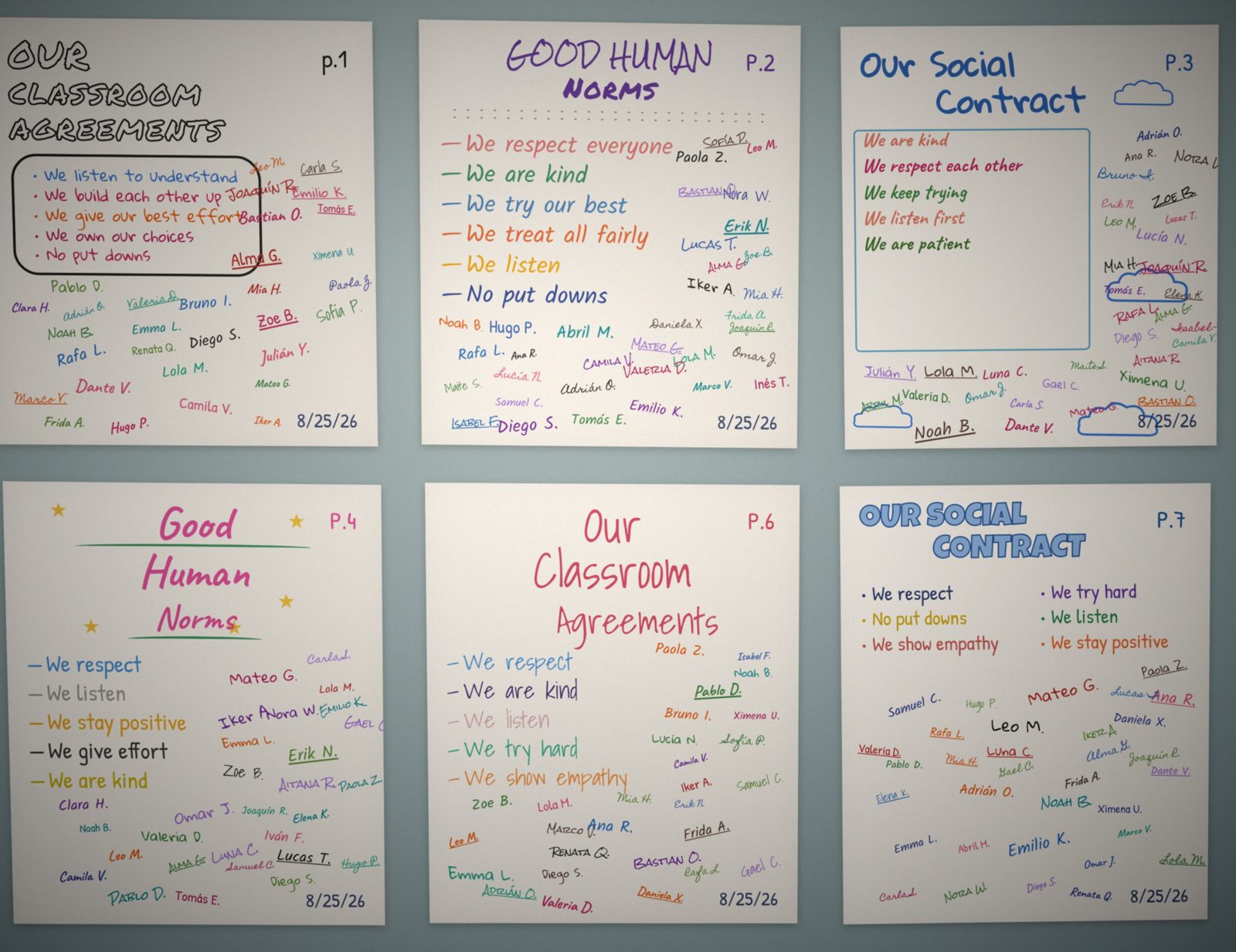
- Students choose the title, such as Good Human Norms, Our Classroom Agreements, or Our Social Contract, in any language.
- Students write the norms that came from their sticky notes, about 5 to 7 in all. It’s up to them: enough to matter, few enough to remember.
- Add the period and the date.
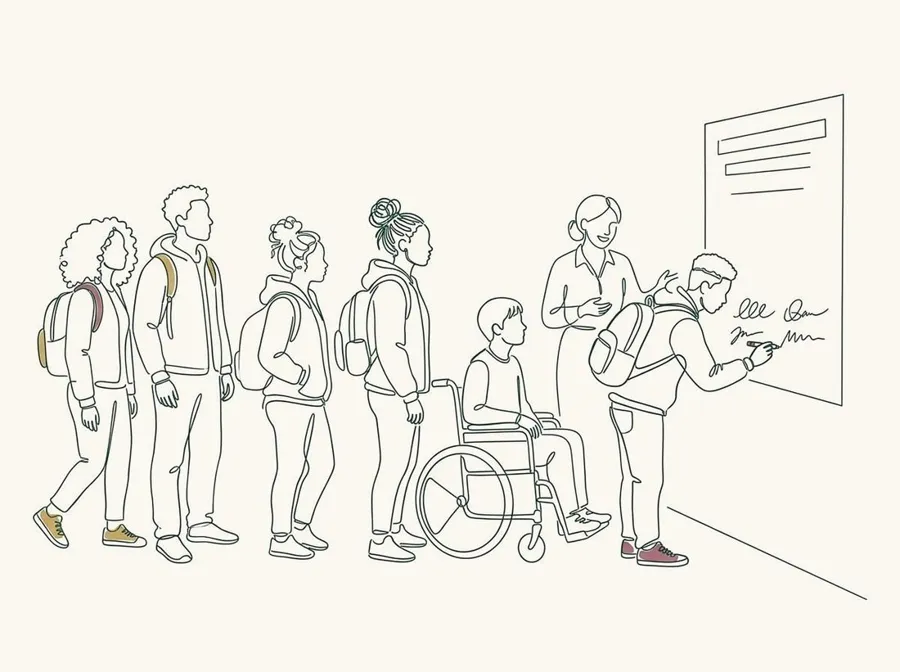
- Everyone signs, adults too.
- Post it all year. Each period gets its own poster.
Sharing photos? Blur or crop out student names.
Keeping them alive
- Name it in the moment: “That was building each other up.”
- Point to the poster, not the student: “Which of our norms helps here?”
- Revisit after a hard day, once a month, and when a new student joins.
- Recognize the skills with specific praise and Rose Tickets.
Student page: build our norms
Step 1. On your own. Answer on three sticky notes, one idea per note:
How do good humans treat each other?
What does a good human do when it gets hard?
What does a good human do after a mistake?
Step 2. Post your notes on the chart paper.
Step 3. Together, group the notes that match. Turn each group into a norm that starts with “We,” about 5 to 7 in all, with at least one for each human skill. Say what we do, not what we don’t.
| Our norm | The human skill it builds |
|---|---|
| We | |
| We | |
| We | |
| We | |
| We | |
| We | |
| We |
Step 4. Choose a title and sign it. Everyone signs, adults too.
Teacher planning page
| Question | My plan |
|---|---|
| Which day will I teach this lesson? | |
| The answer I will model | |
| If a skill is missing, what question will I ask? | |
| Where will each period’s poster hang? | |
| When will we revisit the norms this month? | |
| What did I notice? What will I change next time? |
Sources
Wachtel, T. (2016). Defining restorative. International Institute for Restorative Practices. iirp.edu
From Start With the Adult: Classroom Management Through Human Skills in Every Class by Jessica Rose Mathy, Ed.D. More free tools in Professional Learning.
Illustrations from Start With the Adult by Dr. Jessica Rose Mathy.